28 July 2006

Global Summit 2006 - Technology Connected Futures - and Online event


Global Summit 2006 is being held in Sydney 17-19 October.
Hosted by education.au limited, debate and discussion will be centred around the themes of:
  • Elearning in education and training
  • Careers in a connected environment
  • Designing educational web services
  • Understanding transformation in education
  • Emerging trends in a connected world.
There are many speakers of note, but I am particularly interested in Leigh Blackall, Educational Development, Otago Polytechnic, NZ.

Leigh Blackall's core interest is in education and networked learning. He works in Education Development for the Otago Polytechnic and gives presentations and workshops on networked learning to many educational organisations in Australia and New Zealand. Leigh maintains the Teach and Learn Online Web Log and facilitates the Teach and Learn Online eGroup. He also designs and develops educational resources.

Global Summit Online will take place before, during and after the Global Summit. This online event will begin on 31 July, and is for anyone interested in contributing to ideas about technology connected futures and the future of education and training.

Global Summit 2006 Online will be open to everyone for 5 weeks. From 4 September 2006 only registered Delegates and Thought Leaders will be able to access the online event.

There are discussions and debates within the forums, blogs and papers focussing on the Global Summit 2006 Themes and the paper by James Bosco - 'Tools, Culture and Education: Past - Present - Future'. This paper is aimed to stimulate discussion about the transformation of education and focus on the key issues.

26 July 2006

Talkr -- Letting blogs speak for themselves!

Now here is a genuinely interesting development - for a number of reasons that I am sure you can work out.

I visited Kathy Schrock's Kaffeeklatsch blog today (see the link under Other Blogs) and checked out Talkr.

Talkr converts text-only blogs into podcasts. In other words, Talkr provides a service that allows you to listen to your favorite text-only news sources rather than read them.

For the technically savvy, Talkr can also provide you with a podcast of your favorite news sources. This means that you can plug your MP3 player into your home computer once a day and Talkr will provide you with hours of audio content with no additional work on your part. Talkr will keep tabs on your feeds and send audio to your computer as those audio files become available.

So, you can go to Kathy Schrock's blog, as I did today, and click on Audio file of this post from Talkr. , and listen to the message rather than read the message. Can you see the potential of this?

You might also like to read or listen to Kathy Schrock's Brief overview of K-12 Podcasting. Supporting information is also available as powerpoint, pdf handout, or movie file of the same information. Something for everyone!

Which Book?

Because literacy promotion is such an important function of good library services it is always great to learn about new resources, or rediscover old resources, to help our promotion strategies. I would like to share some recent 'discoveries' demonstrated at the School Library Conference in the UK.

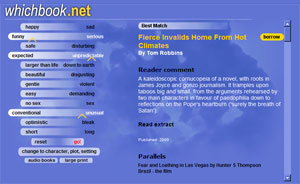
www.whichbook.net is a fantastic new resource for readers. Instead of starting with book titles or authors, readers start with themselves. 'I want a book that is unpredictable, very romantic and a bit sad' or 'I'd like a challenging book, with lots of sex that's also funny.' whichbook enables 20 million different combinations of factors and then suggests titles which most closely match the reader's needs.

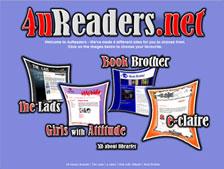
www.4ureaders.net was developed for readers aged 11-16. The site divides into three separate sections to appeal to different audiences within the age group. School and Children's librarians worked with young readers to help plan the content of the site. The site has a fresh new look, new graphics, new colour schemes, more pages... and more to come!


You will find many other sites of interest if you explore Opening the Book: Sites to Visit.

24 July 2006

Famous Max!

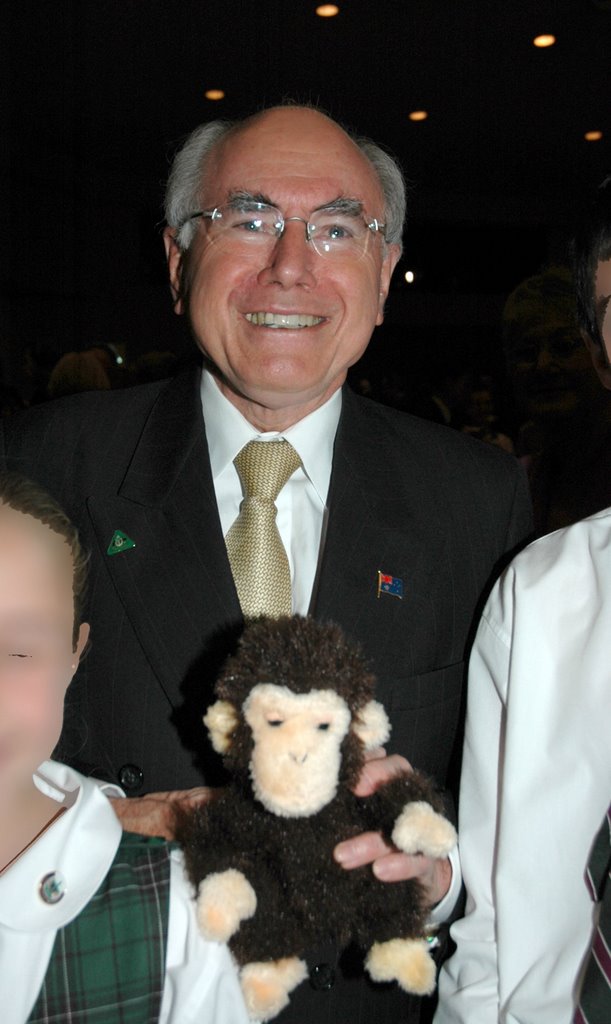
Following on from the theme of creativity within our Library ranks.....don't forget to stay in touch with the Max the Monkey blog. You will find the link to MaxtheMonkey on the BibBlog blog list.

This blog was created after the first ever blog session run in the Diocese, and clearly fame has hit Max in the Blogoshere.

During the holidays Max's journey took him into the very arms of our Prime Minister ..... good work Max and Max's bloggers!(Come-on - tell us how this was orchestrated!)

Let me know if you are interested in having anything run at your school. I have been invited to Marion College to work with on an overview and introduction to Web 2.0. I hope this opportunity might help us all learn more about what we as TLs can do to promote new insights and new technologies at whole staff level.

I'm also looking forward to the LTST forum, and sharing our insights with the LTST team.

That "Library Thing"!!! and Web 2.0

I continue to be surprised and delighted by the innovative enthusiasm of some of our library professionals - and realise that perhaps the time has come not to be quite so 'quiet' about Web 2.0 technologies and their place in the world.

If the journey is still a bit confusing for you, keep an eye out for the next issue of SCAN. If all goes to plan there will be an article SCAN commissioned me to write called Engaging the Google generation through Web 2.0. The premise behind this article is to ease readers into the meaning and importance of understanding WEb 2.0 before launching into "well, what does this really mean for libraries, and what is Library 2.0??".

However, I have some great colleagues in the Parramatta Libraries who have embraced Web 2.0, and are busy responding to the opportunities/challenges. Here is another example...

Some time last term I read about Library Thing.....yet another Web 2.0 development. Didn't share this with anyone....but was thrilled to find (during morning tea at the SIRSI Unicorn Train the Trainer sessions) that Beth Ashworth has gotten right into using LibraryThing to manage her personal book collection. After suffering an unfortunate loss of her own spreadsheet setup of her resources (trust those husbands!) she has pounced on LibraryThing as the solution.

What does LibraryThing offer? It allows you to create your own library collection, and share this information with others as well. Most importantly it uses the Z39.50 protocol - and we parramatta groupies know just what this allows us to do!! Using this protocol Beth can search a global list of over 40 libraries, and import images and information from Amazon to populate her own LibraryThing collection. Beth can also add reviews, and other information, so you will find her review of Birdwing published in Fiction Focus Review also added to her LibraryThing collection. In addition, LibraryThing allows the use of Tags to organise and display information, print a spreadsheet of holdings etc.

Great work Beth. You will find Beth's LibraryThing space here and the profile of her Karaba Library here.

Goodbye to home grown programs and spreadsheets! Hello to Web 2.0 social networking and ease of operations!!

Yahoo Homepage - now with less directory

Yahoo has dropped the concept of Website Directory as their main presentation platform to using social tools like Y! Answers and MyWeb, along with web services and its developer network, to make external content an important part of its service. As a regular user of Yahoo Groups (ASLANSW and IASL) I am interested to see these changes, as I just might be tempted to use Yahoo more broadly than before - particularly as I can customise, track my mail, messages, news feeds etc.

Nevertheless, it is an interesting point that the new Yahoo homepage links predominantly to Yahoo properties - rather than to external sources, as it did in the old days. The directory service is still there, but has been de-emphasized on the homepage

Then:

The directory was a section on the homepage (albeit near the bottom)...and


...it was also featured as a search option

Now:

The directory is still one of the options hanging off the search box - but isn't otherwise featured on the homepage

Perhaps it's just a sign of the times: directories of external websites are out, Yahoo media properties are in.

Via ReadWrite Web

18 July 2006

Anthony Browne Groupies!

Julie Walter shares her experience as an Anthony Browne Groupie:

On Friday 23rd June, I had the great pleasure of attending a talk and book signing by Anthony Browne, the English author & illustrator.

Anthony is a slightly built man and he looks a lot like “Willy the Wimp” without the facial hair. He spoke to a large group that included about 6 school groups and many other Librarians and parents.
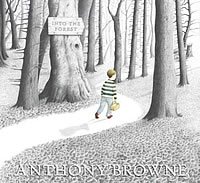
He opened the talk by telling the audience how he & his brother used to play “The Shape Game” when they were young. They would draw a shape and the other one would turn it into something. He drew some examples and then invited some of the children to participate. He spoke about how he studied art at University and he became a children’s illustrator a bit by accident. He then read to the children “Into The Forest” and pointed out many of the clues he had drawn in the book.


The children in the audience asked Anthony why he always drew gorillas or chimps in his books. Anthony told the children that he loved Gorilla’s because when you looked into their eyes, they were so human and gentle. He felt gorillas & chimps were so close to us in behaviour & characteristics, it makes them so interesting.


Anthony went on to tell the audience how he had lost his father when he was quite young. He said his father had taught him and his brother to play rugby, cricket and to box. He encouraged his sons to draw and his father also wrote poetry. He was a big man, physically, but a gentle, cultured man. Anthony based his “gorilla dad” character on his father in the book “Gorilla”. He also said that was his favourite book. He was an absolute delight and happily signed the many books I took in. He hasn’t been in Australia for almost 10 years, so I felt especially pleased I had the opportunity to hear him speak.

18 June 2006

Enabling Learning in Today's World

Last week all members of the Catholic Education Office had the opportunity to hear/see a presentation of the new Executive Director, Gregory Whitby.

Mr Whitby's presentation was inspiring for the vision that it communicated in relation to delivering education for the future. There is much written about future learning, and new frameworks to embrace, and all are critical to the shape of learning and how we should be developing it. I have been sharing with you some of these ideas in our network meetings, as well as exploring them in more detail on this blog and on my own professional learning blog.

Mr Whitby reminds us that learning and teaching is a:
  • relational process
  • collaborative and contextual processes
  • demanding and intellectually rigorous
  • time and space non-dependent
These are not cliches, but core to the very essence of our teaching framework. We need to talk about these further. But learning that is time and space non-dependent as well as collaborative is everything that is Social Networking (see the paper from FutureLabs) and the 'remix' that is Web 2.0.

I was greatly encouraged to hear our Executive Director throwing out the challenge to us all. In fact, it is a real buzz to be working in an education environment that recognises the future directions of the lives of our digitally native students, and which encourages exploration of the possibilities.

In response to requests from TLs at the last round of network meetings, and to help further the knowledge of social networking and Web 2.0, I will be organising further inservices on Blogging, Social Bookmarking, and other Social network tools such as Flickr, RSS News Readers etc. If you missed the network meetings, but have a special request - just let me know.

Form Follows Function - this slide from the presentation positions education with a different set of questions....

What if....
  • students weren't grouped in uniformly sized 'classes'?
  • students weren't expected to move from one room to another almost identical to the last. What might schools look like?
  • multidisciplinary teams of professionals took corporate responsibility for a cohort of students?
  • students owned every hour?
  • study spaces were designed and furnished for collaborative as well as individual work?
  • older students were not always required to be physically present in order to be "attending"?
  • if ICT infrastrucuture and portable devices were ubiquitous?

Reading Promotion

Monica McQueen, TL at the International School Of Luxembourg, shares her reading promotion tips with subscribers of the ECIS listserv. I thought I would share her tip with you all, as you might like to try this out for yourselves:
Here is a great resource to promote good books for summer reading. It's a website with video clips of famous authors (Eoin Colfer, Anne Fine, Terry Pratchett, etc.) giving book talks about books they have written.

I have been displaying all the books we have in the library which are featured on the website, and then playing the videos for our 5th graders and letting them take the books that interest them.

For children's & younger YA books, under "Category" choose "Children's" and then you can sort by title or author.

http://www.meettheauthor.com/bookbites/

17 June 2006

MySpace and Information Literacy

Half an Hour: Adults and MySpace

I am regularly being asked "what shall do we do about MySpace?". Michael Downes writes an extensive reflection on emerging issues being raised by online forums such as MySpace. He raises many issues. , many of which are particularly relevant in relation to values education in our schools and our responsibility to help develop emotional intelligence and personal resilience in our students.

"The dirty little secret is that we as a society are all up in arms about MySpace not because it’s not safe but because it’s making visible the extent to which we are failing our kids."

He also touches on a completely different message of importance - information literacy in a digital environment.

"My own observation, though, is that people who spend more time online are more able to deal with these issues, that the people who accept things uncritically - especially when presented from an authoritative source - are those who are uneducated and those who are mostly offline.

In other words, what I am saying is that my own observation suggests that prolonged exposure to the internet makes someone more able to reason critically, not less. And in my more cynical days I suggest that it is this increased capacity to reason that is sparking concern among some adults."

These and other issues need to be discussed in depth, and an appropriate response developed by us and our schools if we are to meet our educational responsibilities in the new digital arena.

15 June 2006

The Library: Next Best Thing....

What we shouldn't forget while we develop our libraries to respond to the full digital age requirments, is the intrinsic and practical value that libraries have always offered - particularly in supporting information seekers.

Across the country, public libraries are giving would-be entrepreneurs a helping hand with resources and expert guidance.

From Business Week Online comes an interesting read about the very relevant role that Public Libraries play in the business world. How do School Libraries fit into that picture?

13 June 2006

Top Three Dangers for Libraries in the Digital Age

I have just picked up a good read from Doug Johnson, the Director of Media and Technology for the Mankato Public Schools since 1991. Doug recently spent 10 days in Australia touring with his son, but in between the fun he spoke at the Queensland Library Conference on June 5.

Doug is a visionary, and completely responsive to the challenges of the global digital agenda.

He says:

"I would suggest three factors that are creating a dangerous “perfect storm” of societal changes that will impact libraries. Only by actively addressing the challenges each of these dangers pose will libraries survive and thrive. Here are the winds of crisis that are buffeting us:

1. The growing digitization and portability of information.
2. Emerging fundamental changes in the nature and sources of information.
3. The critical need for new skills for workers in a global economy"

His paper takes a look at each "dangerous" trend in turn, and then looks at some strategies that may help libraries and librarians use these winds to propel us in new directions rather than capsize us.

A comprehensive 23 page read! If you weren't aware of, or thinking about, the changes and our need to respond to them "big time", then you will be by the end of this paper!

Doug has made available his supporting-notes for that presentation here.

10 June 2006

Social Software and Learning

Recently I was alerted to a particularly good paper on the topic of Social Software- which also looks closely at the 'shape' of learning as a result of the transformation in the technology environment of our students.

I have posted a message about this on heyjude.

07 June 2006

Copyright in the Digital Age

The recent seminar presentations for Copyright Agency Limited's Copyright in the Digital Age series are now available http://www.copyright.com.au/seminar_papers.htm

You can also download any of the information sheets provided at the seminar, including Protecting and Offering work in the Digital Environment at http://www.copyright.com.au/information.htm

The Latest from "Bib Blog" - Weekly News

I have been experimenting in developing our Bib Blog as a communication tool for all. You will notice that Bib Blog now has several RSS feed buttons (for those who know how to use them) and also a Subscribe by Email box.

You may wish to subscribe to Bib Blog via email - and then any messages will appear in your email box when there is an addition to Bib Blog. As my own groupwise email is set to HTML (ask your LTST how to set this), the message I receive looks just like it does on the Blog.

At this point in time, however, it doesn't show the comments. I am going to experiment with the Comments settings, to see if we can have that also coming to you via email, for those who want to go with this option.

Subscribing by email is a neat trick for using Blogs as a communication tool. The email option is a great way to distribute information as well as keeping a running record of discussions.

If you decide to give email a go - let me know how it works. But for now, you will have to link back to read the actual Bib Blog to have access to comments and feedback.